


Advanced Injector CT Scan Technology for Safe & Accurate Imaging | JUDcare Edot CP100
2025-08-15
Understanding Injector CT Scan Safety with the JUDcare Edot CP100 System
A contrast-enhanced computed tomography (CT) scan relies on the precision and safety of its injector CT scan system. The injector’s role is to deliver a contrast agent that enhances organ and tissue visibility, enabling radiologists to detect even subtle abnormalities with exceptional accuracy. However, the injector CT scan process involves crucial challenges-such as maintaining patient safety, ensuring accurate dosage, and preventing complications like contrast leakage or nephropathy.
That’s where the JUDcare Edot CP100 injector CT scan system excels. Engineered for reliability and precision, it combines automation, syringe-free technology, and real-time monitoring to deliver a safer, more efficient imaging workflow for modern radiology departments.
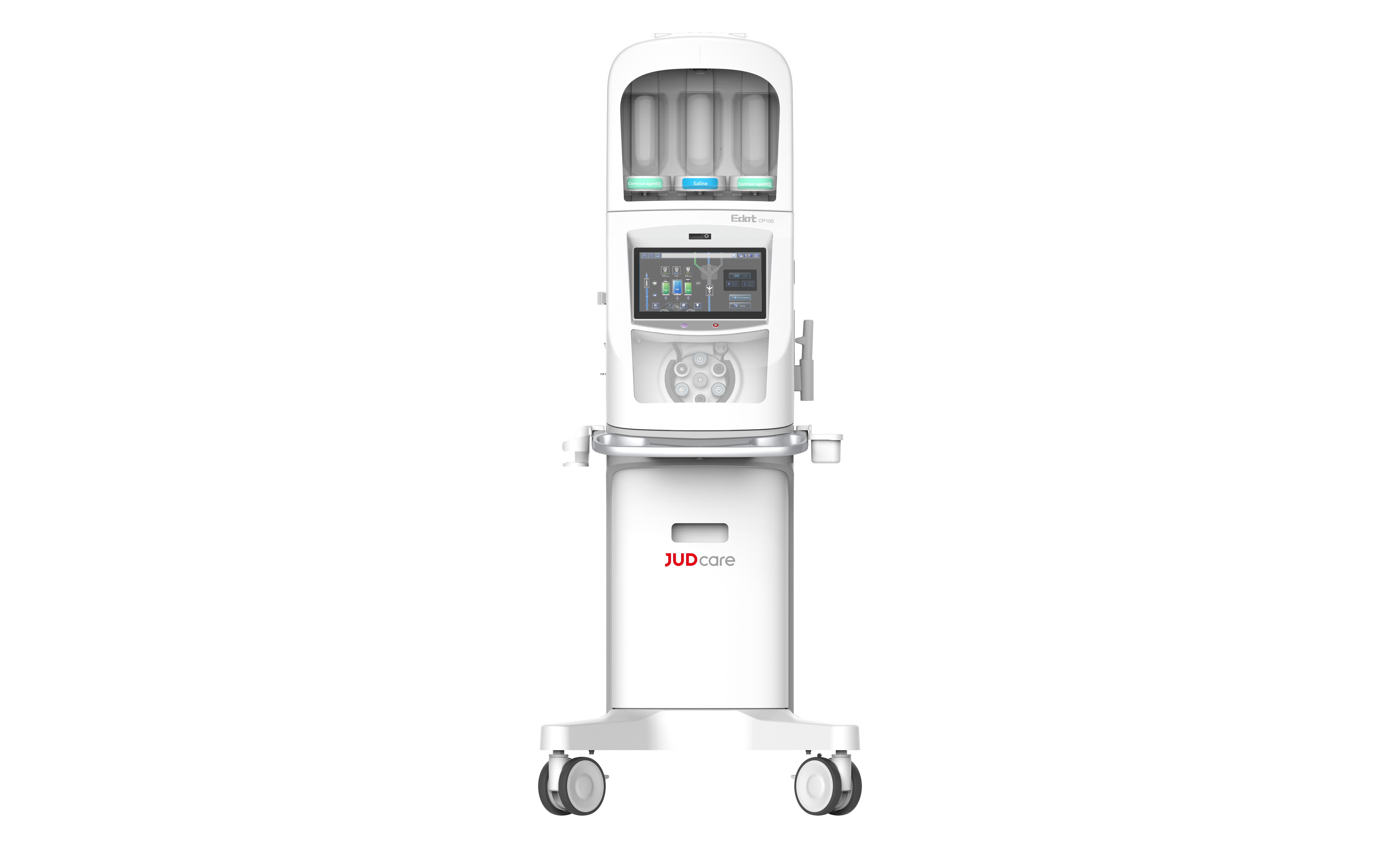
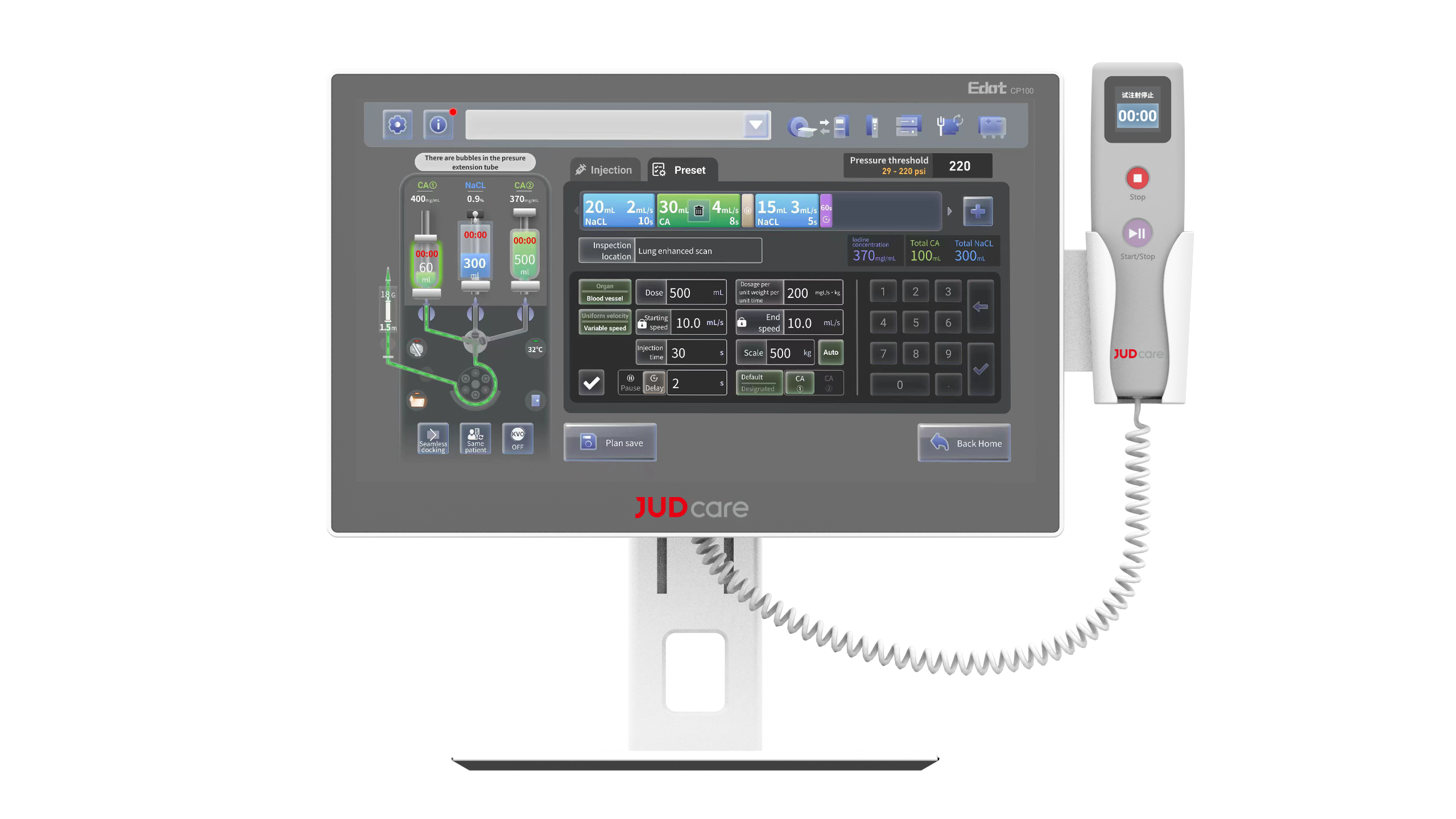
JUDcare Edot CP100 Injector CT Scan System: Precision and Safety Redefined
The Edot CP100 represents a breakthrough in medical imaging injection systems, offering unmatched safety and consistency for high-volume diagnostic centers. Key innovations include:
-
Syringe-free technology to prevent cross-contamination and save preparation time.
-
Accurate flow-rate control for consistent contrast distribution across each scan.
-
Dual-agent injection design, allowing flexible and advanced injection protocols.
-
High-capacity bottles (up to 1000 mL) to support continuous clinical operation.
-
Integrated temperature control that maintains optimal contrast viscosity and stability.
-
Smart safety monitoring, detecting abnormal flow or pressure in real time.
These features make the Edot CP100 injector CT scan system an ideal solution for hospitals that demand both efficiency and patient safety during diagnostic imaging.
Enhanced Care for Vulnerable Patient Groups
The JUDcare Edot CP100 system provides precision dosing and adaptive injection modes to ensure personalized care during injector CT scan procedures, especially for sensitive populations:
-
Pregnant patients: Non-urgent contrast CT exams should be avoided when possible.
-
Lactating mothers: Minimal risk of contrast transfer; breastfeeding interruptions are rarely required.
-
Pediatric patients: Automated micro-dosing ensures high-quality imaging with minimal exposure.
By tailoring contrast injection to patient characteristics, the Edot CP100 reduces risks while maintaining diagnostic clarity.
Reducing Contrast-Induced Nephropathy (CIN) Risk
Contrast-induced nephropathy is one of the major safety considerations during injector CT scan procedures. The Edot CP100 integrates intelligent control over contrast dosage based on glomerular filtration rate (GFR) levels, reducing renal burden and supporting safe imaging for patients with kidney concerns.
-
60 mL/min: Very low CIN risk during injector CT scan
- 45–59 mL/min: Low risk
- 30–45 mL/min: Moderate risk
- <30 mL/min: High risk
Combined with hydration protocols and real-time dose regulation, the Edot CP100 significantly lowers the probability of CIN, ensuring patient safety without compromising imaging quality.
Preventing Adverse Reactions and Extravasation
Adverse reactions—such as nausea, allergic response, or tissue swelling—can occur during rapid or uncontrolled injections. The Edot CP100 injector CT scan system mitigates these risks through:
-
Smooth, controlled flow regulation to prevent hemodynamic instability.
-
Pressure-sensitive safety mechanisms that detect and halt injections if extravasation is detected.
-
Optional premedication protocols for high-risk patients.
This intelligent system helps radiology teams maintain both clinical safety and patient comfort throughout the entire imaging process.
Clinical Risks and Diagnostic Precision in Injector CT Scan Procedures
While CT scans themselves are generally safe, the injector CT scan process involves certain clinical considerations. Potential risks include:
-
Adverse reactions to contrast agents, such as allergic responses.
-
Contrast-induced nephropathy (CIN) from contrast exposure in at-risk patients.
-
Radiation dose concerns, especially for pediatric and sensitive patient populations.
To address these risks, healthcare providers must carefully manage injection protocols. The Edot CP100 mitigates such risks with controlled and consistent contrast delivery, ensuring both safety and effectiveness.
At the same time, diagnostic precision relies on delivering the right contrast agent at the right rate. Commonly used agents in injector CT scan procedures include:
-
Iodine-based agents for intravenous imaging.
-
Barium sulfate for gastrointestinal imaging.
-
Gadolinium agents for MRI.
For CT applications, non-ionic, low-osmolality iodine-based agents have become the standard—offering an ideal balance between image quality and patient safety.
Collaborative Safety in Injector CT Scan Management
Effective CT contrast management involves coordination among radiologists, technologists, nurses, and referring clinicians. Each plays a role in:
-
Reviewing allergy and renal history.
-
Ensuring patient hydration and proper medication review.
-
Selecting optimized injection parameters.
-
Leveraging advanced CT injectors like the JUDcare Edot CP100 to reduce error and elevate image precision.
Through this interdisciplinary approach, hospitals can achieve superior imaging outcomes and patient satisfaction.

FAQ: About Injector CT Scans and JUDcare Edot CP100
Q1: What is an injector CT scan?
An injector CT scan uses an automated system to deliver contrast material intravenously during a CT scan, allowing clearer differentiation between tissues and better diagnostic insight.
An injector CT scan uses an automated system to deliver contrast material intravenously during a CT scan, allowing clearer differentiation between tissues and better diagnostic insight.
Q2: How does the JUDcare Edot CP100 ensure patient safety?
The system integrates syringe-free injection, precise flow control, and intelligent monitoring to minimize contamination, extravasation, and contrast-related complications.
The system integrates syringe-free injection, precise flow control, and intelligent monitoring to minimize contamination, extravasation, and contrast-related complications.
Q3: What contrast agents are typically used?
Non-ionic, low-osmolality iodine-based agents are preferred for injector CT scans due to their safety and superior imaging results.
Non-ionic, low-osmolality iodine-based agents are preferred for injector CT scans due to their safety and superior imaging results.
Conclusion: Redefining the Future of Safe CT Imaging
As hospitals seek to improve both diagnostic quality and patient safety, the JUDcare Edot CP100 injector CT scan system stands at the forefront of innovation. With over 100,000 safe and precise CT injections performed globally, the Edot CP100 continues to demonstrate unmatched performance and reliability in clinical practice. Enhance your hospital’s imaging workflow—choose the JUDcare Edot CP100 for safer, smarter, and more efficient injector CT scan operations.
Ready to upgrade your injector CT scan workflow?
Clearer Fracture X-rays with Medical Dry Imaging Film | JUDcare MDST-24
Fujifilm Drypix Lite vs JUDcare MDST-24: Choosing the Best Medical DICOM printer for Your Facility?
Related Article

Discover how AI radiology is transforming modern healthcare through faster diagnosis, smarter workflows, cloud PACS integration, and improved patient outcomes. Learn how JUDcare supports AI-powered medical imaging.
AI Radiology: How Artificial Intelligence Is Transforming Modern Medical Imaging | JUDcare
Learn how to choose the best CT contrast injector for modern hospitals. Discover key features, patient safety considerations, workflow benefits, and innovative solutions from JUDcare.
How to Choose the Best CT Contrast Injector for Modern Hospitals | JUDcare