


AI Radiology: How Artificial Intelligence Is Transforming Modern Medical Imaging | JUDcare
2026-07-31
AI Radiology: Transforming Modern Medical Imaging and Hospital Workflows
Artificial Intelligence (AI) is rapidly transforming healthcare, and radiology departments are at the forefront of this change. Modern hospitals are increasingly relying on AI to assist in image analysis, improve diagnostic accuracy, streamline workflows, and enhance patient care. AI is not intended to replace radiologists but to serve as a powerful tool that augments human expertise, reduces repetitive tasks, and accelerates decision-making.
As imaging volumes increase and hospitals pursue digital transformation, integrating AI into radiology departments has become essential. From detecting subtle abnormalities in X-rays to prioritizing urgent cases, AI is shaping the future of medical imaging by improving efficiency and patient outcomes. To fully realize these benefits, hospitals also require high-performance medical diagnostic displays that accurately present AI-assisted imaging results.
Understanding AI in Radiology
AI in radiology primarily uses machine learning and deep learning algorithms to analyze medical images. These systems can identify patterns, detect anomalies, and provide preliminary assessments that support radiologists in making more accurate and timely diagnoses. The technology has applications across modalities including CT, MRI, X-ray, and ultrasound.
Key capabilities of AI in radiology include:
-
Automated detection of fractures, nodules, and lesions
-
Prioritization of critical cases for faster reporting
-
Image enhancement and noise reduction
-
Integration with PACS and cloud imaging platforms for real-time analysis
By automating repetitive or time-consuming tasks, AI allows radiologists to focus on complex decision-making and patient interactions, ultimately improving workflow efficiency and diagnostic confidence. For the best viewing experience, these AI-enhanced images should be displayed on DICOM-calibrated medical monitors that provide accurate grayscale and color reproduction.
See How Cloud PACS Improves Medical Imaging Workflow
See How Cloud PACS Improves Medical Imaging Workflow
Workflow Optimization
One of the most significant benefits of AI in radiology is its ability to streamline departmental workflows. Traditional radiology workflows involve manual image review, repetitive quality checks, and extensive report generation. AI can automate many of these processes, reducing bottlenecks and accelerating turnaround times.
AI contributes to workflow optimization in several ways:
-
Automatically flagging urgent cases for priority review
-
Reducing the need for repeat imaging through automated quality assessment
-
Assisting in measurements and annotations to support faster reporting
-
Integrating with RIS and PACS to provide real-time notifications to clinicians
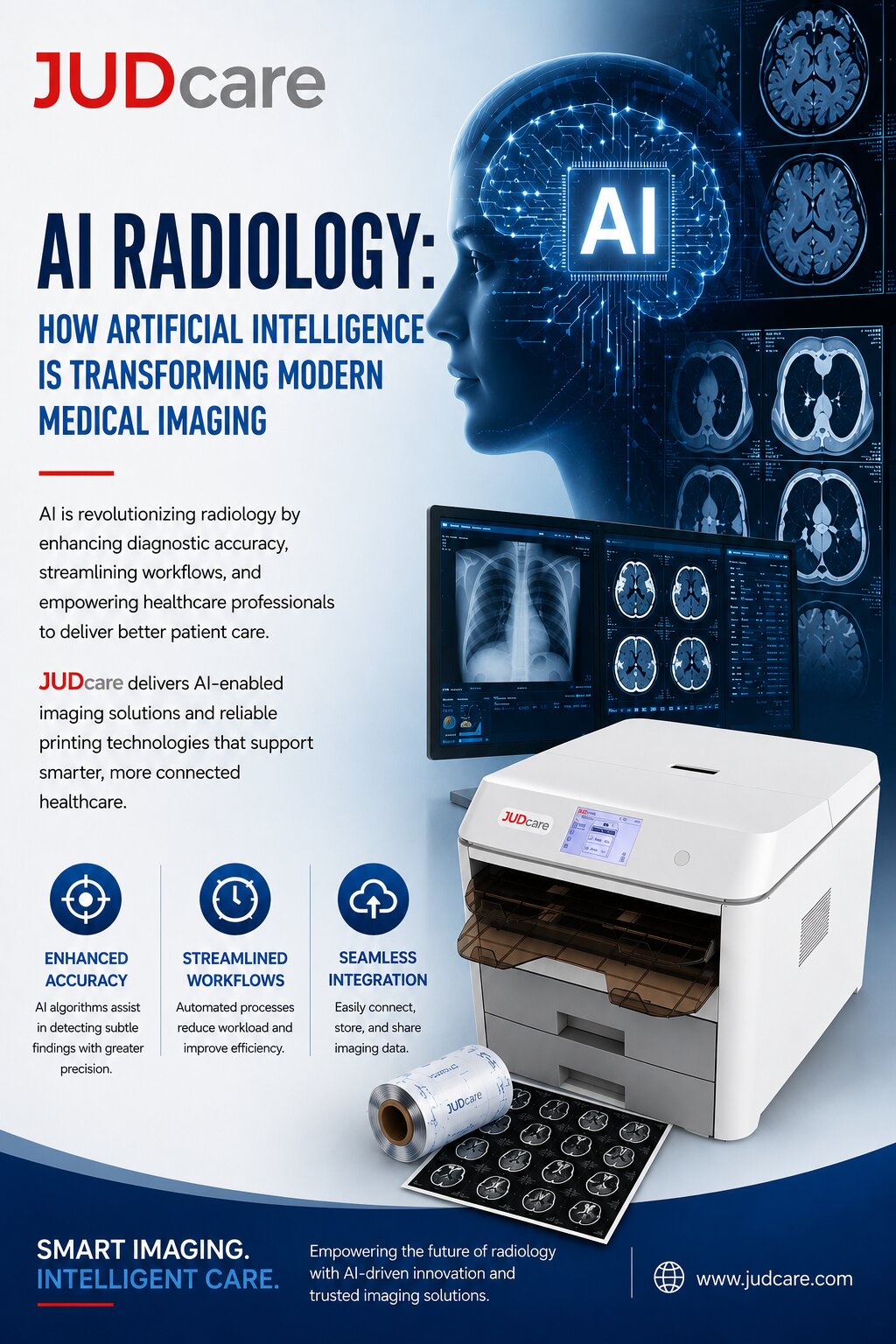
Hospitals that implement AI-assisted radiology often report shorter turnaround times, higher patient throughput, and improved radiologist satisfaction. Combined with high-resolution medical displays, radiologists can review images more efficiently while maintaining diagnostic confidence.
AI serves as a diagnostic assistant, helping radiologists detect subtle findings that might be missed during routine review. Studies have shown that AI algorithms can match or even exceed human performance in identifying certain conditions such as pulmonary nodules, fractures, and intracranial hemorrhages.
The combination of AI and human expertise offers several advantages:
-
Reduction of diagnostic errors
-
Improved detection of early-stage diseases
-
Standardization of imaging interpretations across radiologists
-
Support for complex cases requiring multidisciplinary review
By augmenting human analysis, AI helps ensure more consistent and accurate diagnoses, which is critical for patient care and clinical decision-making. However, achieving maximum diagnostic accuracy also depends on the quality of the display used by radiologists.
Integration With Cloud PACS and Imaging Platforms
AI performs best when integrated with cloud PACS and modern imaging platforms, enabling real-time access to imaging studies, data sharing, and centralized analysis. Cloud integration allows AI to analyze images across multiple hospital sites, facilitating collaboration between radiologists, specialists, and referring clinicians.
Key benefits of AI integration include:
-
Centralized and standardized analysis of images from multiple modalities
-
Support for tele-radiology and remote consultations
-
Seamless workflow integration with cloud PACS, RIS, and HIS
-
Scalable AI deployment across hospital networks
This integration ensures that AI-enhanced radiology becomes a cohesive part of the hospital's digital ecosystem rather than an isolated tool. Accurate image presentation through DICOM-compliant medical displays further supports effective collaboration and diagnosis.
Supporting Clinical Decision-Making
AI in radiology is not limited to image detection; it also provides decision support. Algorithms can suggest differential diagnoses, quantify disease progression, and predict patient risk profiles. This empowers radiologists and clinicians to make more informed decisions quickly, improving patient care outcomes.
Examples of clinical support include:
-
Prioritizing urgent cases based on severity scores
-
Suggesting follow-up imaging based on AI predictions
-
Providing quantitative assessments for treatment monitoring
-
Flagging inconsistencies or anomalies in imaging reports
By supporting clinical decisions, AI reduces human error and helps radiologists maintain high standards of care even under high workloads. Professional-grade medical displays ensure these AI-generated insights are presented with exceptional clarity and precision.
Challenges and Considerations
While AI offers tremendous benefits, hospitals must consider certain challenges when implementing it in radiology:
-
Ensuring integration with existing PACS and HIS systems
-
Maintaini g data privacy and security compliance
-
Training staff to interpret AI-generated suggestions
-
Avoiding over-reliance on AI without clinical judgment
Addressing these challenges requires careful planning, robust IT infrastructure, and a commitment to staff training. Hospitals that successfully integrate AI with clinical oversight gain the greatest efficiency and diagnostic improvements.
Conclusion :
Build a Smarter Radiology Department with JUDcare
Ready to embrace the future of AI radiology? JUDcare provides intelligent medical imaging solutions that help hospitals improve workflow efficiency, enhance diagnostic accuracy, and accelerate digital transformation. From cloud medical imaging systems and mobile imaging workstations to DICOM printing software and diagnostic displays, our integrated technologies support smarter, faster, and more connected healthcare.
How to Choose the Best CT Contrast Injector for Modern Hospitals | JUDcare
Related Article

Learn how to choose the best CT contrast injector for modern hospitals. Discover key features, patient safety considerations, workflow benefits, and innovative solutions from JUDcare.
How to Choose the Best CT Contrast Injector for Modern Hospitals | JUDcare
Discover JUDcare medical thermal printers for hospitals and labs. Print labels, wristbands, reports, and medical images with fast ink-free technology.
Medical Thermal Printer for Hospitals | Labels & Reports