


Healthcare PACS System: Improve Radiology Workflow & Smart Hospital Imaging
2026-03-12
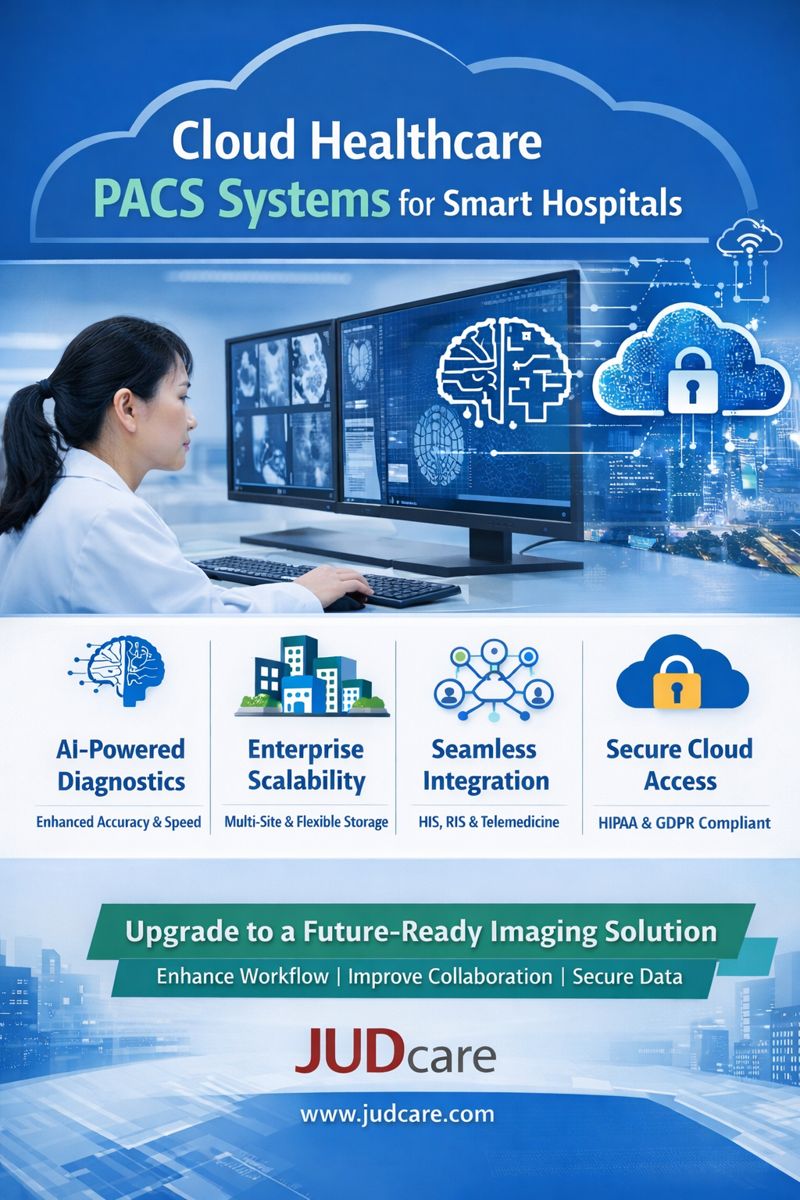
Healthcare PACS System: Powering Smart Hospital Imaging
A modern healthcare PACS system plays a crucial role in hospital digital transformation. As medical imaging volumes continue to grow and healthcare organizations expand across multiple facilities, hospitals require intelligent solutions to manage imaging data efficiently and securely.
Traditional imaging environments often relied on local storage systems and manual workflows. These systems created delays in retrieving images, limited collaboration between departments, and increased operational complexity. Today, healthcare providers are moving toward integrated digital infrastructures where imaging data flows seamlessly across clinical systems.
A healthcare PACS system provides the backbone for this transformation. By centralizing medical image storage and enabling secure access across departments, PACS platforms allow clinicians to review diagnostic studies quickly and collaborate effectively.
Hospitals adopting modern imaging technologies are also investing in broader digital healthcare strategies.
Learn more about JUDcare’s digital transformation in healthcare to see how integrated technologies support smarter hospital operations.
Learn more about JUDcare’s digital transformation in healthcare to see how integrated technologies support smarter hospital operations.
JUDcare delivers advanced healthcare PACS system solutions designed for enterprise hospitals, diagnostic networks, and smart healthcare facilities seeking scalable and future-ready imaging infrastructure.
What Is a Healthcare PACS System?
A healthcare PACS system (Picture Archiving and Communication System) is a digital platform used to store, manage, retrieve, and share medical imaging data such as X-rays, CT scans, MRI scans, and ultrasound images.
Instead of relying on physical film archives, PACS systems store imaging studies electronically and allow authorized clinicians to access them instantly from diagnostic workstations or secure devices. This digital approach significantly improves radiology efficiency and eliminates delays caused by manual image handling.
Modern PACS platforms function as complete medical imaging management systems, connecting imaging equipment with hospital information systems such as HIS and RIS. Radiologists, clinicians, and specialists can review imaging studies in real time, improving clinical decision-making and patient care coordination.
Unlike traditional image storage systems, a modern healthcare PACS system also supports AI-powered diagnostics, cloud connectivity, and enterprise-level data management. These capabilities allow hospitals to manage imaging data more efficiently while supporting advanced diagnostic technologies.
Why Healthcare PACS System Is Essential for Smart Hospitals
Healthcare institutions worldwide are investing in digital infrastructure to improve operational efficiency and patient outcomes. The healthcare PACS system has become a key component of this transformation because it enables centralized imaging management across departments and facilities.
A modern PACS platform allows hospitals to store imaging data in a unified repository where clinicians can retrieve images instantly. This eliminates delays associated with manual processes and ensures faster diagnosis.
Hospitals implementing a healthcare PACS system benefit from improved collaboration between radiologists and physicians. Imaging studies can be reviewed simultaneously by multiple specialists, enabling faster consultation and more accurate clinical decisions.
Digital imaging technologies such as:
JUDcare digital radiography systems integrate seamlessly with PACS platforms, accelerating diagnostic workflows and improving image acquisition efficiency.
JUDcare digital radiography systems integrate seamlessly with PACS platforms, accelerating diagnostic workflows and improving image acquisition efficiency.
In addition, PACS systems reduce operational costs by eliminating film processing, simplifying storage management, and supporting remote radiology consultations.
Workflow, Image Quality, and Radiation: Why Digital Radiography Leads
Digital radiography plays a vital role in modern imaging workflows, particularly when integrated with a healthcare PACS system. This integration allows medical images to be captured, processed, and distributed instantly across hospital networks.
Traditional radiography workflows involved physical film processing and manual transport of imaging studies. These processes slowed down diagnostics and increased the risk of errors or delays.
When digital radiography is connected to a healthcare PACS system, images are automatically transferred to centralized storage and become instantly available for radiologists and clinicians. This dramatically improves radiology workflow efficiency and shortens diagnostic turnaround times.
Advanced image processing tools also enhance image clarity and improve diagnostic accuracy.
Explore JUDcare AI medical imaging solutions to see how artificial intelligence helps radiologists detect abnormalities and prioritize urgent cases.
Explore JUDcare AI medical imaging solutions to see how artificial intelligence helps radiologists detect abnormalities and prioritize urgent cases.
Digital imaging technologies also reduce radiation exposure by using advanced detector sensitivity and intelligent image processing. These improvements help ensure patient safety while maintaining high-quality diagnostic imaging.
Enhancing Workflow Efficiency
One of the most significant advantages of implementing a healthcare PACS system is improved workflow efficiency in radiology departments.
Once imaging data is captured, the PACS platform automatically stores, organizes, and distributes the study to relevant workstations. Radiologists can immediately review imaging studies and generate reports, while clinicians can access results directly through integrated hospital systems.
This automated workflow eliminates many manual steps previously required in traditional imaging environments. As a result, hospitals can reduce reporting delays and manage larger imaging volumes without compromising diagnostic accuracy.
Hospitals implementing connected imaging platforms can
Discover JUDcare smart imaging technology solutions that enable efficient medical image management across departments.
Discover JUDcare smart imaging technology solutions that enable efficient medical image management across departments.
Integration and Advanced Tools
A modern healthcare PACS system integrates seamlessly with hospital IT infrastructure, including Hospital Information Systems (HIS), Radiology Information Systems (RIS), and electronic medical records.
These integrations create a unified digital healthcare environment where clinical data, imaging studies, and diagnostic reports are interconnected. Physicians can access imaging results directly from patient records, improving clinical workflow and reducing system complexity.
JUDcare’s PACS solutions also support advanced diagnostic technologies such as AI-powered imaging analysis. AI algorithms assist radiologists by detecting abnormalities, measuring anatomical structures, and highlighting critical findings that require immediate attention.
These intelligent capabilities enhance diagnostic accuracy and support faster clinical decision-making.
Scalability and Flexibility
Healthcare providers must continuously adapt to increasing imaging workloads and expanding healthcare networks. A scalable healthcare PACS system ensures that imaging infrastructure can grow alongside hospital operations.
JUDcare’s enterprise PACS platform supports multi-site hospitals and regional diagnostic networks. Hospitals can expand storage capacity, integrate new imaging modalities, and add additional users without significant infrastructure upgrades.
For organizations planning long-term imaging strategies,
See how cloud medical imaging platforms support scalable radiology infrastructure across multiple healthcare facilities.
See how cloud medical imaging platforms support scalable radiology infrastructure across multiple healthcare facilities.
How does a healthcare PACS system improve radiology workflow?
A healthcare PACS system improves radiology workflow by enabling instant image storage, automated image distribution, and secure access across hospital departments. This reduces reporting time, enhances collaboration between clinicians, and increases patient throughput.
Can a healthcare PACS system integrate with hospital IT systems?
Yes. Modern healthcare PACS systems integrate with Hospital Information Systems (HIS), Radiology Information Systems (RIS), and electronic medical records. This integration allows clinicians to access imaging data directly from patient records and supports smarter clinical decision-making.
Conclusion
A modern healthcare PACS system has become an essential foundation for smart hospital imaging infrastructure. By centralizing imaging data, automating workflows, and integrating AI-powered diagnostics, PACS platforms significantly improve radiology efficiency and collaboration.
Hospitals adopting advanced PACS solutions benefit from faster diagnostic workflows, improved patient care, enhanced data security, and scalable imaging infrastructure.
JUDcare’s healthcare PACS system provides a comprehensive imaging platform designed for enterprise hospitals and modern healthcare networks.
Medical Dry Film Printing in Radiology | High-Quality Diagnostic Imaging
Digital Radiography in Hospitals | DR vs CR Comparison Guide
Related Article

Discover how AI radiology is transforming modern healthcare through faster diagnosis, smarter workflows, cloud PACS integration, and improved patient outcomes. Learn how JUDcare supports AI-powered medical imaging.
AI Radiology: How Artificial Intelligence Is Transforming Modern Medical Imaging | JUDcare
Learn how to choose the best CT contrast injector for modern hospitals. Discover key features, patient safety considerations, workflow benefits, and innovative solutions from JUDcare.
How to Choose the Best CT Contrast Injector for Modern Hospitals | JUDcare