


Digital Radiography in Hospitals | DR vs CR Comparison Guide
2026-02-17
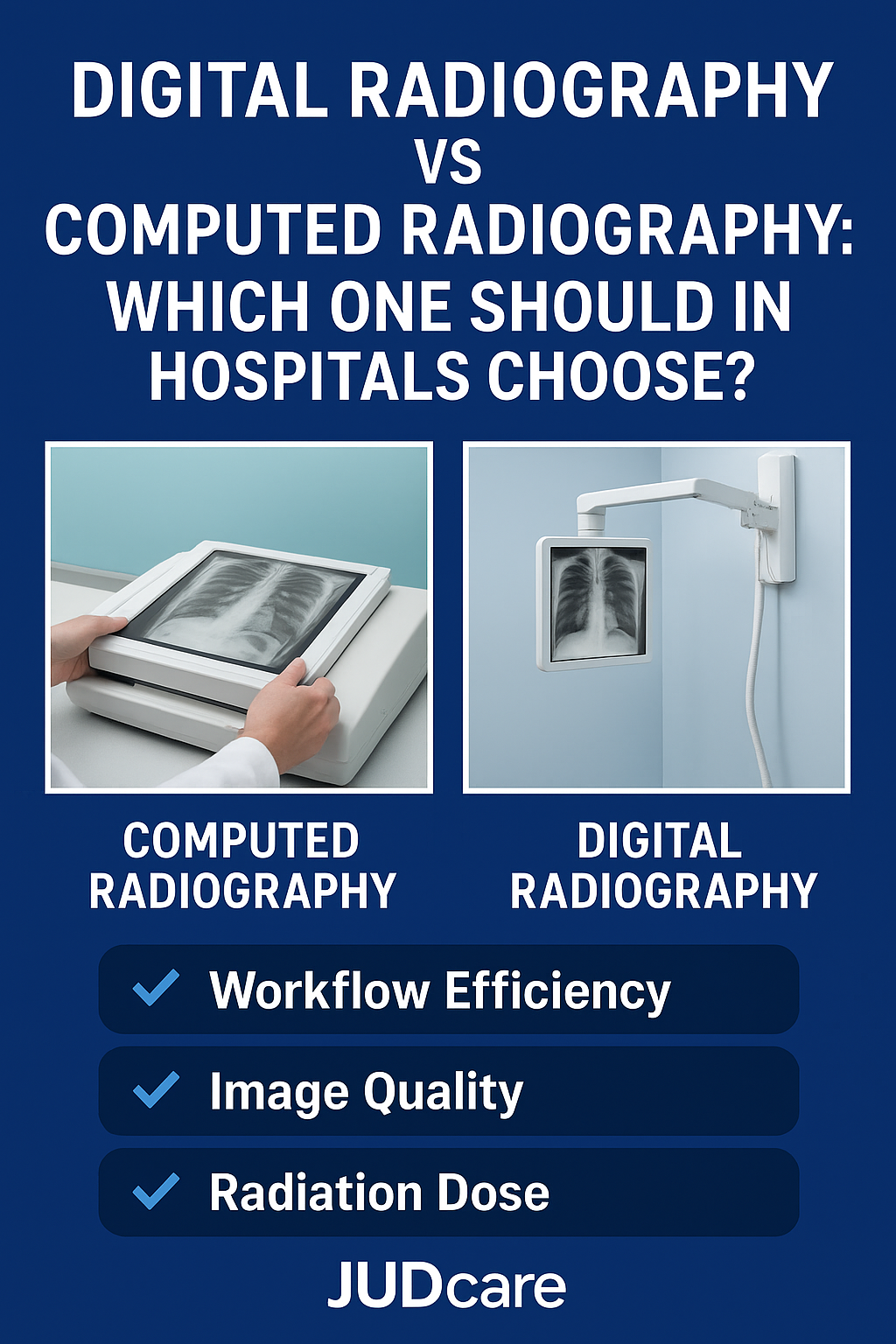
Digital Radiography and the Future of Hospital Imaging
As hospital digital transformation accelerates worldwide, selecting the right X-ray technology has become a strategic decision rather than a purely technical one. Radiology departments today must evaluate whether traditional Computed Radiography (CR) can still meet growing clinical demands or whether Digital Radiography (DR) is the more sustainable long-term solution.
While both technologies are capable of producing diagnostic-quality images, digital radiography delivers clear advantages in workflow efficiency, radiation dose reduction, image consistency, and seamless integration with modern hospital information systems. These advantages directly support smarter clinical operations, faster diagnosis, and improved patient experience.
Understanding CR and DR: Key Differences in Modern Imaging
What Is Computed Radiography (CR)?
Computed Radiography uses a photostimulable phosphor plate to capture X-ray images. After exposure, the plate must be manually taken to a CR reader to generate a digital image. While CR was the standard for decades and remains widely used in smaller hospitals and clinics, it introduces delays and additional handling steps.
Computed Radiography uses a photostimulable phosphor plate to capture X-ray images. After exposure, the plate must be manually taken to a CR reader to generate a digital image. While CR was the standard for decades and remains widely used in smaller hospitals and clinics, it introduces delays and additional handling steps.
Key characteristics of CR include:
-
Manual cassette handling and scanning
-
Slower workflow compared to DR
-
Moderate image quality
-
Lower initial cost, but higher maintenance and long-term costs
CR is particularly suitable for small clinics, low-volume departments, or facilities with budget constraints. However, as hospital workloads increase and digital integration becomes critical, CR may limit operational efficiency and scalability.
What Is Digital Radiography (DR)?
Digital Radiography represents the next generation of X-ray imaging. DR systems use flat-panel detectors that capture and transmit images instantly to workstations, eliminating the need for manual plate processing.
Key characteristics of DR include:
-
Immediate image preview within seconds
-
Superior image quality with higher dynamic range
-
Reduced radiation dose
-
Streamlined workflow with fewer manual steps
-
Seamless integration with PACS, cloud platforms, and AI tools
DR is ideal for high-volume hospitals, emergency departments, ICUs, and facilities pursuing smart healthcare solutions. The technology supports automated workflows, improves patient throughput, and reduces errors associated with manual handling.
Workflow, Image Quality, and Radiation: Why Digital Radiography Leads
Workflow Comparison Between CR and DR
Workflow efficiency is a major differentiator between CR and DR. In CR, the process involves positioning the patient, capturing the X-ray, removing the cassette, transporting it to the CR reader, scanning, and finally reviewing the image. Each cycle can take 45–90 seconds, depending on the system and operator efficiency. In contrast, DR captures images in seconds and instantly displays them on the workstation. Radiologists can immediately preview and analyze images, significantly reducing examination time and increasing patient throughput. Hospitals using DR often report up to three times faster workflow, making it particularly beneficial for emergency and high-demand departments.
Image Quality Considerations
Image quality is essential for accurate diagnosis. DR systems offer superior spatial resolution, higher dynamic range, and more consistent image quality. Advanced DR systems also support AI-assisted diagnostic tools that detect fractures, lung abnormalities, and other critical findings. While CR can produce acceptable diagnostic images, it is prone to inconsistencies caused by worn phosphor plates, dust, or misalignment. Over time, CR systems may produce images with reduced contrast and clarity, limiting their suitability for high-precision diagnostics.
Radiation Dose Comparison
Patient safety is increasingly important, especially in pediatric imaging and repeated exams. DR systems typically require 30–50% less radiation than CR, thanks to highly sensitive detectors and intelligent image processing. Lower radiation exposure reduces risks for patients while maintaining high diagnostic accuracy. CR systems generally require higher doses to achieve equivalent image quality, which can increase cumulative patient radiation over time.
Cost, Maintenance, and System Integration Considerations for Hospitals
Although digital radiography involves a higher initial investment, it offers superior long-term cost efficiency. DR systems reduce ongoing expenses by eliminating consumables such as plates and cassettes, minimizing retakes, lowering maintenance requirements, and enabling faster patient turnover. Over time, these factors often result in a lower total cost of ownership. CR systems may appear cost-effective initially, but cumulative expenses from plate replacement, scanner servicing, and workflow inefficiencies can significantly increase lifetime costs.
In terms of system integration, digital radiography aligns naturally with modern hospital IT infrastructure. DR supports automatic DICOM transfer, structured reporting, dose tracking, and real-time connectivity with PACS, RIS, HIS, cloud platforms, and AI tools. While CR systems can integrate with PACS, their manual processes limit efficiency and reduce compatibility with advanced digital and AI-driven workflows.
Integration with Hospital Systems
DR systems integrate seamlessly with modern hospital infrastructure, including cloud PACS, AI platforms, RIS, and HIS systems. They support automatic DICOM transfer, intelligent dose tracking, and standardized imaging workflows. CR systems can integrate with PACS, but manual handling and slower image conversion reduce efficiency and limit compatibility with AI tools.
Which Hospitals Should Choose CR?
CR remains a viable choice for:
-
Small clinics or rural hospitals
-
Low-volume imaging centers
-
Facilities with limited budgets
-
Backup or secondary imaging systems
It is suitable where workflow speed, high-volume processing, and advanced AI integration are not priorities.
Which Hospitals Should Choose DR?
DR is the preferred solution for:
-
Medium to large hospitals
-
Emergency and trauma departments
-
High-volume radiology departments
-
Facilities implementing cloud imaging and AI workflows
-
Hospitals prioritizing lower radiation dose and consistent image quality
DR provides the foundation for a modern, efficient, and standardized radiology workflow, supporting smart hospital initiatives.
Frequently Asked Questions About Digital Radiography
1. Is digital radiography worth the higher initial investment?
Yes. Digital radiography improves workflow efficiency, reduces radiation exposure, lowers long-term operational costs, and integrates seamlessly with modern hospital systems. Most hospitals achieve a strong return on investment within a few years.
Yes. Digital radiography improves workflow efficiency, reduces radiation exposure, lowers long-term operational costs, and integrates seamlessly with modern hospital systems. Most hospitals achieve a strong return on investment within a few years.
2. Can digital radiography integrate with existing PACS and HIS systems?
Yes. Most DR systems fully support DICOM standards and integrate smoothly with PACS, RIS, HIS, cloud imaging platforms, and AI diagnostic tools.
Yes. Most DR systems fully support DICOM standards and integrate smoothly with PACS, RIS, HIS, cloud imaging platforms, and AI diagnostic tools.
3. Does digital radiography completely replace computed radiography?
Not in all cases. While some small clinics may continue using CR due to budget constraints, most medium and large hospitals rely on digital radiography as their primary imaging technology.
Not in all cases. While some small clinics may continue using CR due to budget constraints, most medium and large hospitals rely on digital radiography as their primary imaging technology.
Conclusion:
While Computed Radiography still has a role in limited, low-volume environments, digital radiography is clearly the superior long-term solution for hospitals seeking to modernize imaging workflows, enhance diagnostic accuracy, and adopt AI-driven healthcare technologies. With faster image acquisition, consistent image quality, lower radiation dose, and seamless digital integration, digital radiography enables hospitals to deliver safer, more efficient, and future-ready patient care.
Ready to upgrade your radiology department with digital radiography?
Contact JUDcare today to discover how our digital radiography systems, cloud imaging platforms, and intelligent radiology solutions help hospitals build a scalable, efficient, and future-ready imaging ecosystem.
Healthcare PACS System: Improve Radiology Workflow & Smart Hospital Imaging
Hospital Digital Transformation Challenges in HIS Modernization | JUDcare
Related Article

Discover how AI radiology is transforming modern healthcare through faster diagnosis, smarter workflows, cloud PACS integration, and improved patient outcomes. Learn how JUDcare supports AI-powered medical imaging.
AI Radiology: How Artificial Intelligence Is Transforming Modern Medical Imaging | JUDcare
Learn how to choose the best CT contrast injector for modern hospitals. Discover key features, patient safety considerations, workflow benefits, and innovative solutions from JUDcare.
How to Choose the Best CT Contrast Injector for Modern Hospitals | JUDcare