


The Advantages of Cloud-Based Radiology Reporting
2026-10-29
Cloud-Based Radiology Reporting: Key Benefits | JUDcare
Radiology reporting is an essential part of modern healthcare, helping clinicians interpret diagnostic findings, plan treatments, and make informed clinical decisions. However, traditional reporting workflows can face challenges such as fragmented information systems, manual processes, delayed report distribution, and limited access across healthcare facilities.
Cloud-based radiology reporting provides a digital approach to creating, managing, storing, and sharing diagnostic reports through cloud infrastructure. When appropriately configured and integrated with existing medical imaging and hospital information systems, it can improve information accessibility, support collaboration, and streamline radiology workflows. For hospitals, diagnostic centers, and healthcare networks, cloud-based reporting is an important consideration in digital transformation. Understanding its key benefits can help healthcare organizations determine whether a cloud-based approach meets their operational, clinical, and technical requirements.
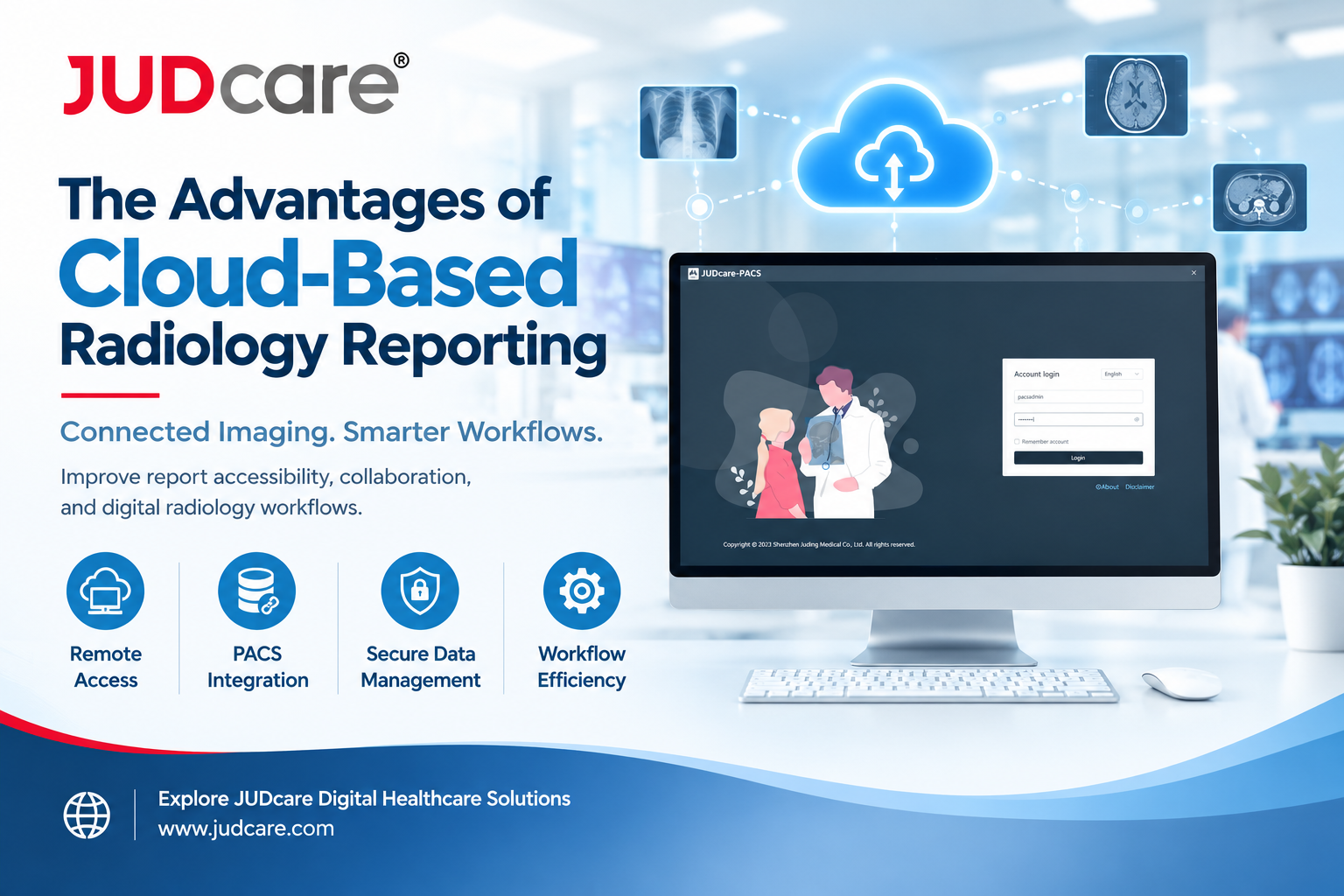
What Is Cloud-Based Radiology Reporting?
Cloud-based radiology reporting is a system for managing and accessing diagnostic imaging reports using cloud-hosted infrastructure rather than relying exclusively on local hospital servers.
Depending on the platform, authorized radiologists can create or review reports remotely, while referring clinicians can access completed reports through connected applications. Integration with Picture Archiving and Communication Systems (PACS), Radiology Information Systems (RIS), and Hospital Information Systems (HIS) can help connect reporting with broader clinical workflows.
Common capabilities include:
-
Remote accessibility: Access reports from authorized devices and locations.
-
System integration: Exchange information with compatible PACS, RIS, and HIS platforms.
-
Secure data management: Use access controls, encryption, and audit trails to help protect patient information.
-
Standardized reporting: Apply structured templates to support consistent documentation.
-
AI-assisted workflows: Connect compatible tools for image analysis, prioritization, and reporting support.
The specific features available depend on the cloud platform, its configuration, and its integration capabilities.
1. Improved Radiology Workflow Efficiency
One of the main advantages of cloud-based radiology reporting is the potential to simplify report management and distribution. Centralized access can reduce dependence on manual document transfers and disconnected local systems.Depending on the implementation, automated notifications, centralized report assignments, and visibility into pending cases can help radiology teams coordinate their work more effectively.
For example, when a report is completed and made available through an integrated system, authorized clinicians may be able to retrieve it without waiting for separate document delivery. This can support communication between radiology departments and referring clinical teams. Improved access and workflow coordination may help reduce avoidable administrative delays. Actual report turnaround times depend on staffing, examination volumes, network performance, and existing clinical processes.
2. Remote Access and Better Clinical Collaboration
Cloud-based reporting can help healthcare professionals access diagnostic information across different departments, facilities, and locations. This capability is particularly relevant to hospital networks, remote consultation services, and teleradiology programs.With suitable access permissions and system integration, cloud-based reporting can support remote specialist consultations, information sharing between hospital branches, and multidisciplinary treatment discussions.
For healthcare networks operating multiple diagnostic centers, centralized access may also help standardize reporting procedures across locations. Remote access does not eliminate the need for reliable connectivity, appropriate user authorization, or secure information exchange. These requirements should be considered when planning a cloud-based radiology reporting deployment.
Discover how JUDcare's cloud medical imaging platform supports remote image access, information sharing, and connected radiology workflows.
Discover how JUDcare's cloud medical imaging platform supports remote image access, information sharing, and connected radiology workflows.
3. Standardized Reporting and Quality Control
Consistent report structure helps clinicians locate important findings and interpret diagnostic information efficiently. Cloud-based reporting platforms may support standardized templates, centralized report management, and quality-monitoring workflows. Structured reporting can improve consistency across departments by organizing findings, observations, and conclusions in a predictable format. Depending on the platform, additional features may include report tracking, audit histories, and AI-generated suggestions.These capabilities can help healthcare organizations review documentation practices and identify opportunities for process improvement.
However, standardized templates and AI assistance do not guarantee diagnostic accuracy. Radiologists must retain appropriate clinical oversight, and reporting practices should follow the healthcare organization's quality-assurance procedures.
4. Data Security and Regulatory Compliance
Protecting patient information is a fundamental requirement for digital radiology reporting. Cloud platforms may offer security features such as encryption, role-based access control, user authentication, audit trails, and backup services.Healthcare organizations should evaluate how each provider manages data storage, access permissions, backups, incident response, and service continuity.Regulatory obligations also vary by location. For example, HIPAA may apply to covered US healthcare organizations and their business associates, while GDPR may apply to personal-data processing within its scope.
Using a cloud service does not automatically guarantee regulatory compliance. Healthcare providers must assess applicable laws, contractual responsibilities, data residency requirements, and the security controls implemented by both the provider and the organization. A suitable cloud deployment should be supported by documented security policies, risk assessment, and ongoing monitoring.
5. Integration With AI and Advanced Analytics
Artificial intelligence is creating new opportunities to support medical imaging workflows. When compatible AI applications are integrated with cloud-based radiology reporting, they may help connect image analysis, reporting, and workflow management.Potential applications include flagging studies for priority review, assisting with measurements, highlighting findings for radiologist assessment, and supporting structured documentation.
Analytics dashboards may also help managers monitor indicators such as report turnaround times, examination volumes, pending workloads, and resource utilization.These insights can support operational planning and continuous improvement. However, AI capabilities vary by system, and clinical use requires appropriate validation, integration, and professional oversight. Cloud-based infrastructure alone does not mean that a reporting platform includes AI functionality.
6. Integration With PACS and Digital Healthcare Systems
Cloud-based radiology reporting works best when it supports a connected medical imaging environment. Integration with compatible PACS, RIS, HIS, and other clinical applications can help reduce information silos and improve access to diagnostic reports.
For example, an imaging study may be managed through RIS, stored in PACS, and linked to a report that authorized clinicians can access through connected hospital applications. The exact workflow depends on the systems involved, interoperability standards, and implementation requirements. For hospitals developing a smart healthcare strategy, connected reporting can complement broader initiatives in digital image management, clinical communication, and radiology workflow optimization.
Learn more about AI in radiology and its integration with PACS and cloud imaging platforms and how these technologies can support connected medical imaging workflows.
Learn more about AI in radiology and its integration with PACS and cloud imaging platforms and how these technologies can support connected medical imaging workflows.
How to Choose a Cloud-Based Radiology Reporting Solution?
Hospitals should assess interoperability, security, reporting functionality, scalability, implementation requirements, and ongoing costs before selecting a platform. Important considerations include compatibility with existing PACS and RIS systems, data protection measures, backup and recovery procedures, user permissions, reporting templates, technical support, and staff training.
Successful implementation also requires coordination among radiologists, IT teams, administrators, and other stakeholders. A solution should fit clinical workflows and operational requirements rather than introduce unnecessary complexity.
Advancing Digital Radiology With Cloud-Based Reporting
Cloud-based radiology reporting offers healthcare organizations a way to improve report accessibility, support collaboration, streamline workflows, and connect diagnostic information across clinical environments.Its effectiveness depends on appropriate system integration, data protection, implementation planning, and alignment with clinical needs. By carefully evaluating these factors, hospitals and diagnostic centers can determine how cloud-based reporting may support their digital transformation goals.
Conclusion: Is Cloud-Based Radiology Reporting Right for You?
Cloud-based radiology reporting can improve accessibility, streamline medical imaging workflows, and support collaboration across healthcare facilities. Before implementation, healthcare providers should evaluate costs, data security, system reliability, and integration with existing PACS and HIS systems.
Looking to advance your medical imaging workflow?
Contact JUDcare or visit us www.judcare.com to explore JUDcare's medical imaging and digital healthcare solutions.
Dual-Syringe vs. Roller Pump CT Injectors | Complete Comparison
Related Article

Compare dual-syringe and roller pump CT injectors, including consumable costs, workflow efficiency, fluid management, and digital integration for modern CT imaging.
Dual-Syringe vs. Roller Pump CT Injectors | Complete Comparison
Discover how AI radiology is transforming modern healthcare through faster diagnosis, smarter workflows, cloud PACS integration, and improved patient outcomes. Learn how JUDcare supports AI-powered medical imaging.
AI Radiology: How Artificial Intelligence Is Transforming Modern Medical Imaging | JUDcare